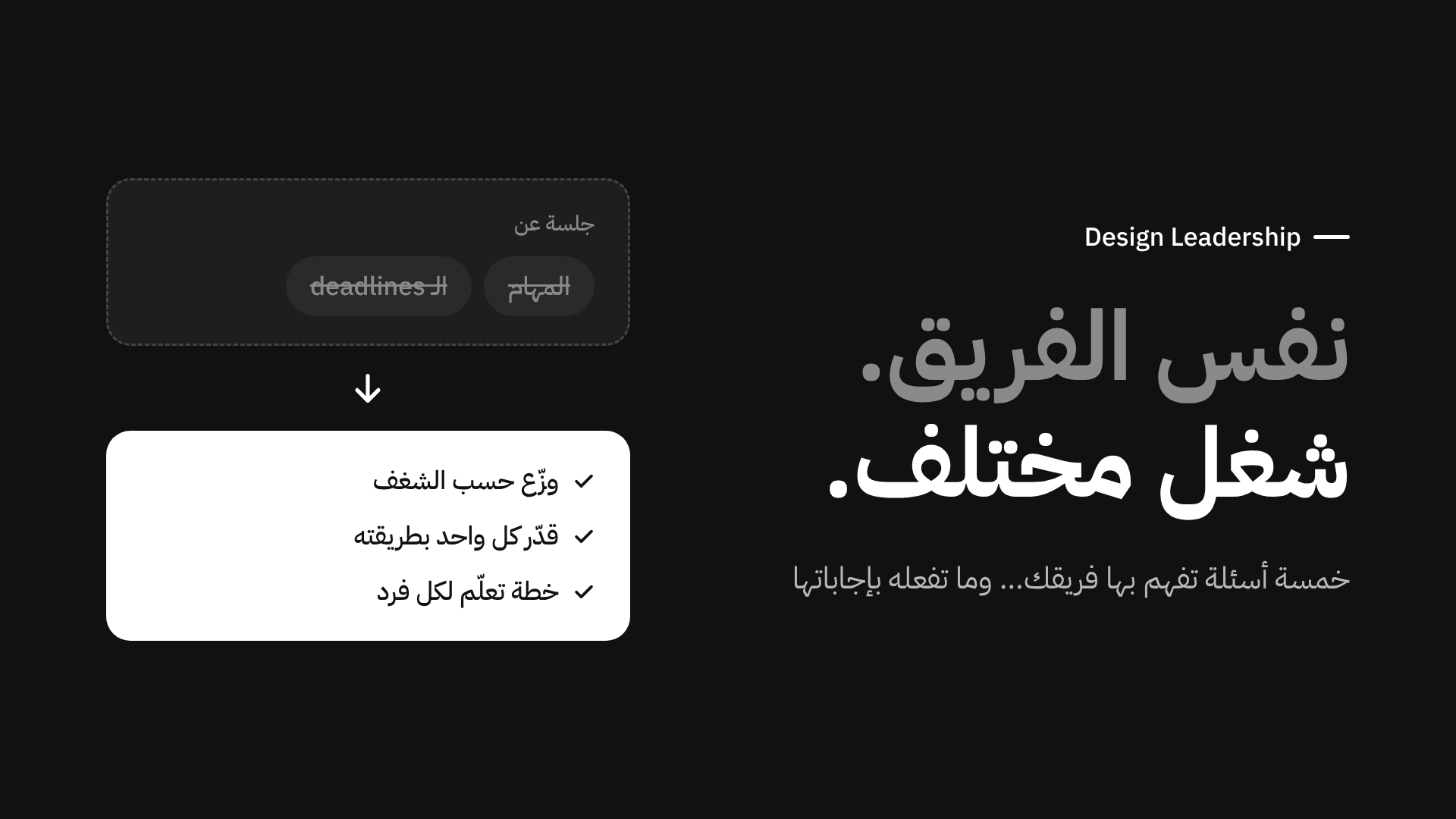
The same team can produce completely different work. And more often than not, the difference isn't skill — it's knowing what drives each person. نفس الفريق يمكن أن يُخرج عملاً مختلفاً تماماً. والفرق في أغلب الأحيان ليس في المهارة، بل في أن تعرف ما الذي يحرّك كل فرد فيه.
Most of a manager's conversations with their team revolve around tasks, handoffs, and deadlines. Over time, they come to know each person's performance well — but not the person themselves: what gives them energy, what drains them, and where they want to go. معظم حديث المدير مع فريقه يدور حول المهام والتسليمات والمواعيد. ومع الوقت يعرف أداء كل شخص جيداً، لكنه لا يعرف الشخص نفسه: ما الذي يمنحه طاقة، وما الذي يستنزفه، وإلى أين يريد أن يصل.
When that picture is missing, decisions about assignments, recognition, and growth get built on assumptions. Sometimes those assumptions are right. But they're still guesses. وحين تغيب هذه الصورة، تُبنى قرارات توزيع العمل والتقدير والتطوير على افتراضات. قد تكون صحيحة أحياناً، لكنها تبقى تخميناً.
The 1:1 session isn't a new idea, and neither are the questions I'll share. Plenty of managers run them — and then the answers sit in a document somewhere. The real difference lies in two things: what you do with the answers after the session, and how it eventually shows up in the product. That's what this article tries to make concrete. والجلسة الفردية ليست فكرة جديدة، ولا الأسئلة التي سأعرضها. كثير من المديرين يعقدونها، ثم تبقى إجاباتها في الأوراق. الفرق الحقيقي في خطوتين: ما تفعله بالإجابات بعد الجلسة، وكيف يظهر ذلك في المنتج نفسه. وهذا ما يحاول هذا المقال أن يوضحه.
The fix is simple: a one-on-one session with each person on your team, before you make any decision that affects them. Its value depends on three conditions: الحل بسيط: جلسة فردية مع كل شخص في فريقك، قبل أن تتخذ أي قرار يخصه. لكن قيمتها تعتمد على ثلاثة شروط:
- Individual, not group. The honesty you need doesn't surface in front of colleagues.فردية لا جماعية. الصراحة التي تحتاجها لا تظهر أمام الزملاء.
- Not a review. No task updates, no performance talk. The conversation is about the person themselves.ليست تقييماً. لا مراجعة مهام، ولا حديث عن الأداء. الحديث فيها عن الشخص نفسه.
- Not just before an action. If it lands right before a decision, they'll read it as a setup — not real interest.قبل أي إجراء. إذا جاءت قبل قرار مباشرة، سيفهمها الموظف على أنها تمهيد لشيء ما، لا اهتماماً حقيقياً.
Your job in the room is to ask and listen — not to judge, and not to steer. دورك فيها أن تسأل وتستمع، لا أن تحكم أو توجّه.
Five questions are enough to start: خمسة أسئلة تكفي لتبدأ:
I ran this session with three designers, each on their own. عقدت هذه الجلسة مع ثلاثة مصممين، كل واحد على حدة.
One of them told me he feels proud and happy when I thank him in a public meeting. A simple sentence — but it says plainly how he wants to be appreciated. That's a detail no performance review would ever surface. أحدهم قال إنه يشعر بالفخر والسعادة حين أشكره في اجتماع عام. جملة بسيطة، لكنها تقول بوضوح كيف يحب أن يُقدَّر، وهي معلومة لا يكشفها أي تقييم أداء.
And at the end of each session, all three thanked me for the time and the space — without being asked for their opinion. It was clear they felt lighter, slightly further from the pressure of the task list. وفي نهاية الجلسات، شكر الثلاثة على الوقت والمساحة التي أخذوها، دون أن يُطلَب منهم رأي. كان واضحاً أنهم ارتاحوا نفسياً، وابتعدوا ولو قليلاً عن ضغط المهام.
The session itself is only half the work. If the conversation stays on paper, the next one loses its credibility before it starts. Three steps turn understanding into decisions: الجلسة نفسها نصف العمل فقط. إذا بقي الكلام على الورق، فستفقد الجلسة التالية مصداقيتها قبل أن تبدأ. ثلاث خطوات تحوّل الفهم إلى قرارات:
- Assign projects based on what each person loves, as much as the priorities of the business allow. You won't always be able to — but every time you can, it makes a difference.وزّع المشاريع حسب ما يحبه كل شخص، بقدر ما تسمح أولويات العمل. لن تستطيع دائماً، لكن كل مرة تستطيع فيها تصنع فرقاً.
- Appreciate each person the way they told you they want to be appreciated. The one who prefers public thanks is a different person from the one who prefers a quiet word between the two of you.قدّر كل شخص بالطريقة التي ذكرها. من يفضّل الشكر أمام الفريق يختلف عمن يفضّل كلمة خاصة بينكما.
- Turn their goals into a personalised learning plan — with clear steps, resources, and review dates.حوّل أهدافه إلى خطة تعلّم مخصصة له، بخطوات وموارد ومواعيد مراجعة واضحة.
The clearest impact I've seen is a deeper understanding of the product. A designer who stays in the space they love accumulates context no one else has: they know the product's history, its problems, the decisions already made. So when they work on a new feature or an improvement, they tie it back to what they already know — and build a coherent system instead of a disconnected feature. وأوضح أثر لمسته هو فهم أعمق للمنتج. المصمم الذي يبقى في المساحة التي يحبها يتراكم لديه سياق لا يملكه غيره: يعرف تاريخ المنتج ومشكلاته وقراراته السابقة. فحين يعمل على ميزة جديدة أو تحسين، يربطها بما يعرفه، فيبني نظاماً متكاملاً بدل ميزة منفصلة.
And with that understanding comes sharper execution and a better user experience. Because they aren't finishing a task — they're building something they're proud of. ومع هذا الفهم تأتي دقة أعلى في التنفيذ وتجربة مستخدم أفضل. لأنه لا يُنهي مهمة، بل يبني شيئاً يفتخر به.
Passion alone isn't enough to distribute work. On my team, two designers wanted to work on the same payments product. الشغف وحده لا يكفي لتوزيع العمل. في فريقي، أراد مصممان العمل على منتج المدفوعات نفسه.
Instead of picking one, I split the product along each designer's strengths. The one who was stronger in visual design took the parts the end customer sees, and the other took the payments management inside the admin dashboard. I also weighed other factors — what the business needed and how quickly it had to ship. بدل أن أختار أحدهما، قسّمت المنتج حسب نقاط قوة كل منهما. المصمم المتميز في التصميم البصري تولّى الأجزاء التي يراها العميل النهائي، والآخر تولّى إدارة المدفوعات في لوحة التحكم. وأخذت في الحسبان عوامل أخرى مثل احتياج العمل وسرعة التنفيذ المطلوبة.
That way both worked on the product they loved, each on the part they were best at. A preference raised in a session is an entry point to a decision, not a guarantee of one — but it deserves a place to live before it gets dismissed. هكذا عمل الاثنان في المنتج الذي يحبانه، كل منهما في الجزء الذي يتقنه أكثر. فالتفضيل الذي يُقال في الجلسة مدخل للقرار لا وعد به، لكنه يستحق أن تبحث له عن مكان قبل أن تستبعده.
- Turning it into an interrogation. The questions guide the conversation; they aren't a checklist to complete. Follow what they say more than you follow your order.تحويلها إلى استجواب. الأسئلة مرشد للحديث، لا قائمة تُستكمل. اتبع ما يقوله أكثر مما تتبع ترتيبك.
- Replying to every answer. The moment you start justifying or correcting, they stop being candid.الرد على كل إجابة. حين تبدأ في التبرير أو التصحيح، يتوقف هو عن الصراحة.
- Promises you can't keep. Say what you'll try to do — not what they want to hear.وعود لا تملكها. قل ما ستحاول فعله، لا ما يريد سماعه.
- Not coming back to it. Motivations and goals shift. Revisit the conversation at least once a quarter.عدم العودة إليها. الدوافع والأهداف تتغيّر، فراجعها مرة كل ربع سنة على الأقل.
Sometimes the most important management decision is asking before deciding. An hour with each person on your team can save months of decisions built on guesswork. أحياناً يكون أهم قرار إداري أن تسأل قبل أن تقرر. ساعة مع كل شخص في فريقك قد توفّر أشهراً من القرارات المبنية على التخمين.
The biggest thing I learned from this is that these sessions matter no less than following up on tasks. Being close to your team and giving them a free space to talk isn't a break from the work — it is part of the work. وأهم ما تعلمته من هذه التجربة أن هذه الجلسات لا تقل أهمية عن متابعة تنفيذ المهام. أن تكون قريباً من فريقك وتمنحه مساحة حرة للحديث ليس استراحة من العمل، بل جزء منه.
Sometimes the most important management decision is asking before deciding. أحياناً يكون أهم قرار إداري أن تسأل قبل أن تقرر.
I'll leave you with a question: what's the question that, if your own manager had asked you, would have made the difference? وأتركك بسؤال: ما السؤال الذي لو سألك إياه مديرك، لكان فرّق معك؟